
Our Research

Amniotic Fluid Cell Mapping
The human amniotic fluid contains diverse populations of cells released from multiple developing fetal tissues during pregnancy. In the Gerli Lab we use advanced single-cell technologies to map these cellular populations and track their tissue origin along with the development of the baby’s organs. The aim of our research is to understand how the content of the amniotic fluid changes with time in healthy and diseased pregnancies. Understanding these changes is opening new opportunities for advanced fetal health monitoring and to develop novel personalised fetal medicine tools.

Amniotic Fluid–Derived Organoids
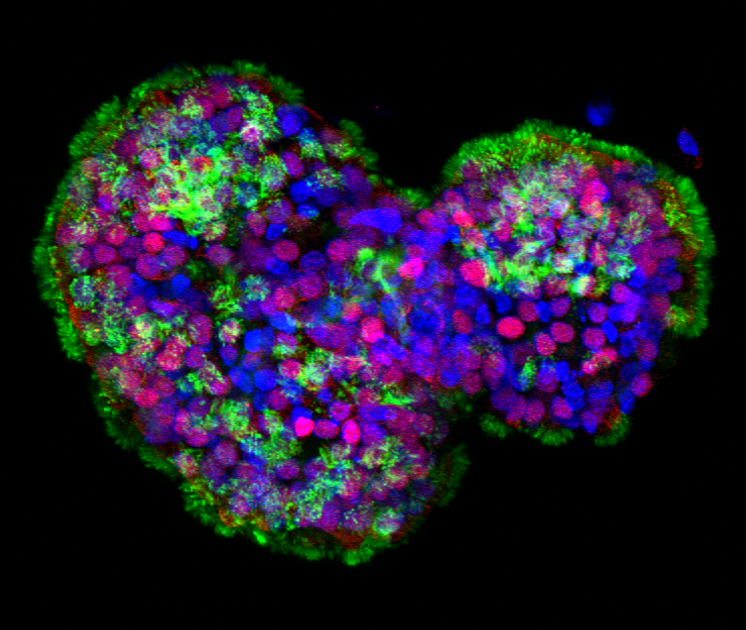
A core focus of the Gerli Lab is the generation and characterization of primary organoid models. These self-organising, three-dimensional mini-organs mimic the structure and function of human tissues such as lungs, kidneys and intestine. Our team uses organoids to model fetal human tissue development in healthy gestation and in presence of congenital diseases. Our recent work demonstrated that fetal organoids can be derived from the amniotic fluid of continuing pregnancies. These organoids open new possibilities to monitor fetal development and disease in a personalised manner.
Disease Modelling
Organoids are rapidly becoming a clinical reality in many disciplines. Our team integrates organoid technologies with single cell analyses, imaging, and bioengineering to modelling diseases affecting developing babies and newborns. Our aim is creating platforms that will help monitor disease progression, optimise therapeutic strategies, and improve clinical outcomes for families affected by congenital and genetic conditions, to advance personalised prenatal and perinatal clinical care. On top of advancing care, the use of organoids reduces reliance on animal models, and brings our research closer to the patients.

Fetal Tissue Research
In the Gerli lab we believe in the importance of accessing discarded primary human fetal tissues for research. Whether used to isolate primary fetal organoids, investigate mechanisms of viral vertical transmission, or uncover the origin of developmental defects, this precious resource allows advancing fundamental discoveries in fetal medicine.